• Hand embroiderers call this thread painting. I’ve been playing around with it for a couple of years. While I’ve done some experimenting with my own designs, there are some amazing embroiderers out there who sell designs, even kits including fabric and thread. I’ve done a few of those and quite enjoyed them, but there’s a kind of paint-by-numbers feeling to them, so this year I’ll play with my own designs. This is my first project of 2023 (begun in December). I started by looking at many photos of chickadees and a particular image of the bird, body facing the camera but head turned, caught my eye.

    Here’s what I learned doing this project:

    • There’s a reason the professional artists use as many as 30 or 40 colors even for something simple like this. I started this project with just 10 colors and had to go back and add in more tans and grays.
    • Adding in colors after the piece is finished makes the surface lumpy. The colors need to be worked in during the work because the threads are snugged so close together.
    • Good lighting is essential. The light I used made it hard to see my guide marks and the thread direction suffered.
    • Drawing on fabric has some challenges. I’ve tried different pencils and pens with ink that washes out and am still trying to find a good balance between a fine line and a temporary one.
    • Pencil graphite smudges the white thread, but it does wash out.
    • Organizing thread during the project is essential.
    • Mary Corbet’s web site is a life saver. I’ve become a patreon, because she deserves support.
    • Long and short stitching is deceptive. You watch a few how-to videos or step-by-step instructions and you think easy-peasy. But no.

    I thought this would be a one-and-done and I’d move on to a different project. But this turned out to be a study. I’ll do another chickadee and incorporate what I learned.

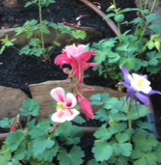
  • After a week of below-freezing nights. After an ice storm that shut down Oregon. After days and days of wind and rain. What’s blooming? Pansies, of course.

    Delicate. Deceptive.

    They will always be in my garden.

  • Studying for months: Done

    Taking practice tests: Done

    Showing up for an actual test: Done

    Getting a 94% passing grade: Done

    Now I have an FCC-issued technician level license and a call sign: KK7JQN.

    Things people do with their ham radios: volunteer on emergency neighborhood response teams, provide communications at long-distance running events. Lots of other things get done of course, as the ARRL, the national amateur association notes.

    This month, two days after passing the license test and two days before getting my license, I helped out as a scribe at our neighborhood’s monthly communications practice session. It’s a couple of hours of folks ensuring their gear is working and that they can be heard by each other. I won’t say it was the most fun two hours I’ve ever spent. Three of us set up radio and antennas at a high point in the neighborhood under a tent on a rainy chilly night and proceeded to do check-ins with emergency volunteers. By the time we were done, we were cold. By the time we had loaded out afterward, we were soaked. But we added one more layer of radio experience and practice to a group of folk who are prepared to be helpful should a massive disruption, like a subduction zone earthquake or a power outage hit our region.

    More fun last summer was supporting the runners at the Waldo 100K Ultramarathon. Of course, back then, I had just begun my studies, and I didn’t really know what I was doing aside from noting runner times at the aid station we supported about half-way into the grueling race. But I got to see how ham operations work, how moving an antenna just a few feet can make a big difference, how seriously hams take transmitting information exactly as they receive it, and how careful those receiving the information are in confirming what they hear.

    When I started down this road, I was only doing it because my wonderful partner asked me to. Now I’m excited to begin being a participant in this community.

    What’s next? Bring on the actual radio gear.