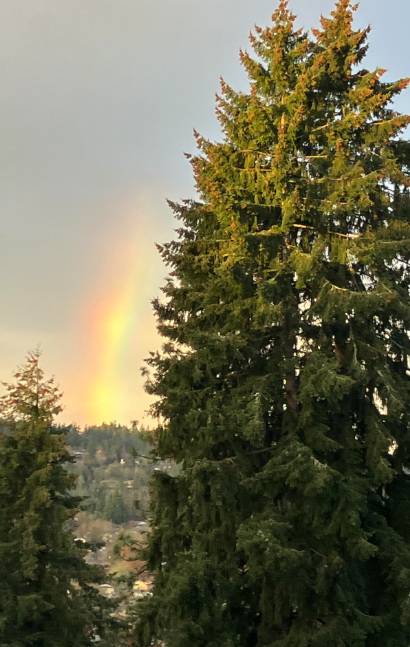
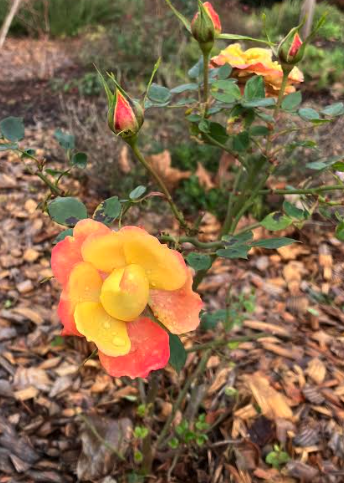
What I see depends on where and when I am. If I’d been six feet or so to the right, or five minutes earlier or later, I wouldn’t have seen this bit of rainbow on a mostly blustery day.
New Year’s resolutions infuse me with excitement. But a week or so before my Jan. 1 ritual, I take a pause to ponder where I’ve been and what I’ve done over the previous year.
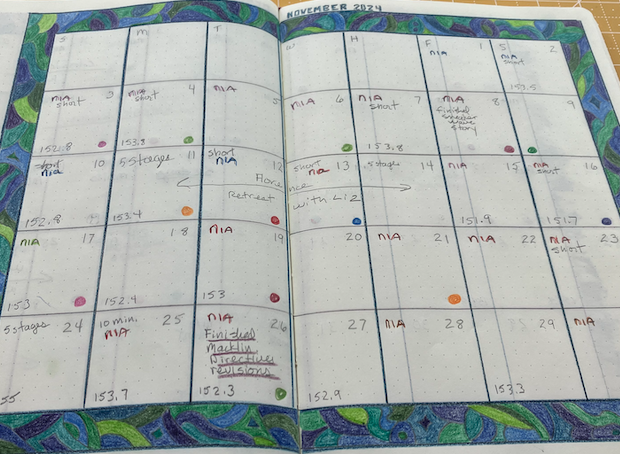
This is easy for me because I maintain a “got done” calendar. It may be counter-intuitive — most people prefer to-do lists — but it helps me settle the dragon, the beast in my brain that is never satisfied. When the dragon’s breathing fire, I can go to my “got done” calendar where I record progress on writing projects, days on which news stories I’ve written have been published, weight loss (and weight gain), days I danced Nia, travel days. I draw this calendar myself in a pink soft-bound notebook with a crow on the cover (to remind me to be curious). It reminds me to celebrate successes, even small ones such as “I wrote four paragraphs” on a day in which writing anything seemed impossible before it was in my rear view mirror.
I decorate the calendar pages because it excites my eyes to see bright colors. The calendar doesn’t have everything I’ve done each month, but it has the things I don’t want to forget, the things that I can feed the dragon should she rumble. The things that didn’t get done don’t show up here, and sometimes that creates a bit of positive fire, kindling a renewed desire to do them.
When Jan. 1 2025 dawns, I’ll have a fair idea of where I’ve been and where I am. It may spark thoughts about where I’d like to go. Sometime in the next week, I’ll share my strategy for greeting the new year.
Meanwhile, may you find bright sparks, joyous dancing, heart-felt singing and kith and kin to share your celebrations.
The darkest time of year requires dark poetry. So here’s Irish poet Joseph Campbell (not the well-known chronicler of mythology) with a few fine lines.
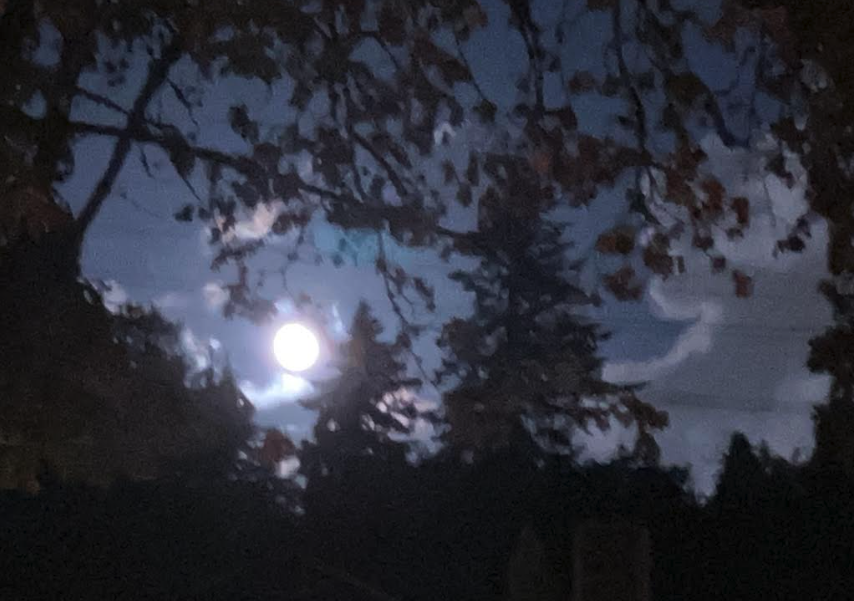
The dawn whiteness. A bank of slate-grey cloud lying heavily over it. The moon, like a hunted thing, dropping into the cloud.
But even with Oregon’s “slate-grey cloud”, there are counterpoints, like this rose from yesterday’s walk.