• Artist Patricio González, from Pixabay

    Day 49 of 52 Nia dance

    A great New York Times article last summer explored some current research on the neuroscience of dance. It’s worth a read, but requires a subscription.

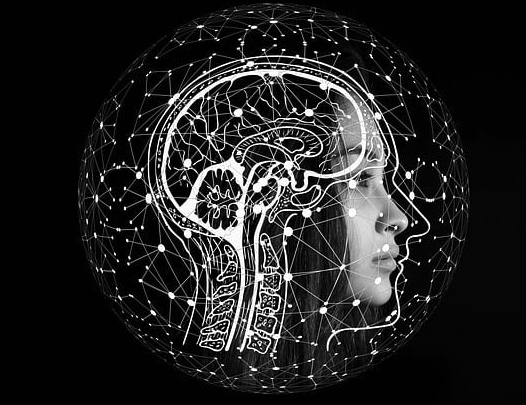
    To summarize the findings of researchers tracking what happen in the brains of dancers: Dance activates multiple areas of the brain: sensory, motor, cognitive, social, emotional, rhythmic, creative. But there’s more. Researchers think these distinct brain areas aren’t only activated, they are interactive with each other.

     Julia Basso, the director of Virginia Tech’s Embodied Brain Laboratory called it “intra-brain synchrony.”

    I like looking at the actual research, so here’s a link to a piece she co-authored in Frontiers in Human NeuroScience in 2021. https://www.ncbi.nlm.nih.gov/pmc/articles/PMC7832346/

    There’s a lot to unpack in her research, but I really like the focus on shared experience: “Consciousness can be redefined not just as an individual process but a shared experience and we as individuals can influence the consciousness of others through our shared experiences.”

    For me, dancing today with the wonderful dancers out in Pleasant Hill, it’s a compelling idea.

  • 48 of 52 days of Nia

    It’s not like I just took up Nia last week or last month or last year. I’ve been dancing pretty much twice a week since 2019.

    This year in April I trained to receive my Nia white belt. That experience, seven days of learning and dancing, gave me back to myself. By that I mean that the dancing helped me disentangle myself from the cultural noise about me and my body — what I should look like, how I should feel, how I should think about myself.

    It gave me space to consider other questions: How do I really feel? What am I actually thinking? What do I really want that has nothing to do with advertising or cultural imperatives? The deep dive into dance helped strip away the social noise and let me be in a mindful body space. Mind and body as a unit, not two separate systems.

    But that’s a concept that’s hard to hold onto. The cultural noise is continuously loud and I’ve had several decades to embed it. Mostly it’s my brain yelling at my body for failing to meet my long list of shoulds without considering if the shoulds are meaningful to me.

    But today, dancing “Selfless” with Casey Bernstein (one of the moving to heal routines in the online catalog), there was a moment where I understood again what Nia means to me.

    It’s the safe place where body and mind can be in sync without the “shoulds.” My mind is not yelling at my body for acting like an off-leash dog running wild. My body is not huddled in a corner wondering why it’s being yelled at yet again for liking whatever in the hell it is currently liking.

    Today I got to feel how sad it has been that my brain gets so mad at my body for being the sensory system that it is. My body doesn’t have words, just feelings. Today, while dancing, I was sad. And the sadness was rich and true.

  • Day 47 of 52 Nia dance

    I haven’t selected any of the “Moving to Heal” routines from Nia’s online library, so I chose one today: “2gether” with Jule Aguirre.

    This 45-minute routine begins with a little trick Nia instructors have. The first time I heard it, I thought it was dumb. “Smell the moment,” they will say. I thought it was a bit of an affectation, a new way of inviting people to be present. But if you take it literally — which they intend, I think — you breath in deeply and then release it, which is always a great way to begin dancing. Now, I smile whenever I hear it and I do take that good, grounding inhale and exhale.

    I don’t know why certain routines at certain times offer an emotional release, but I had that experience today dancing with Jule. I loved the graceful tai chi-style movements, the pace, and the invitation to be aware of how I felt physically as we moved through the routine. Jule called for an inventory of sensation at the beginning, asking me to note any stiffness or pain anywhere while walking slowly around. At the end, she called for a similar inventory to see if there were changes.

    In the beginning, I had a twingey nerve from my lower back going into my left hip. By the end, that sensation had gone. More importantly for me, there is something very soothing and centering in this routine that I found meditative. I know I will come back to it.