• Tomatoes growing like crazy. Grapevines out of control with their hidden clusters of fruit. I get up in the morning and step outside to take it in before the sun gets too serious about things. Here in the southern Willamette Valley, we are about to turn the corner into the hot sharp days of August, when the tomatoes will get fat and red, and the afternoons will send us to the river for relief.

    I call this blog “Exquisite Now” because I am prone to procrastination. (I used to just crastinate, but then I turned pro!) The blog title reminds me to do things rather than just to think about doing things. We planted the tomatoes in April. Craig cut back the grape vines in February and weeded in May. That was then. And this is the exquisite voluptuous now of summer.


    What is it the the Zen Buddhists say? “Before enlightenment, chop wood, carry water. After enlightenment, chop wood, carry water.”
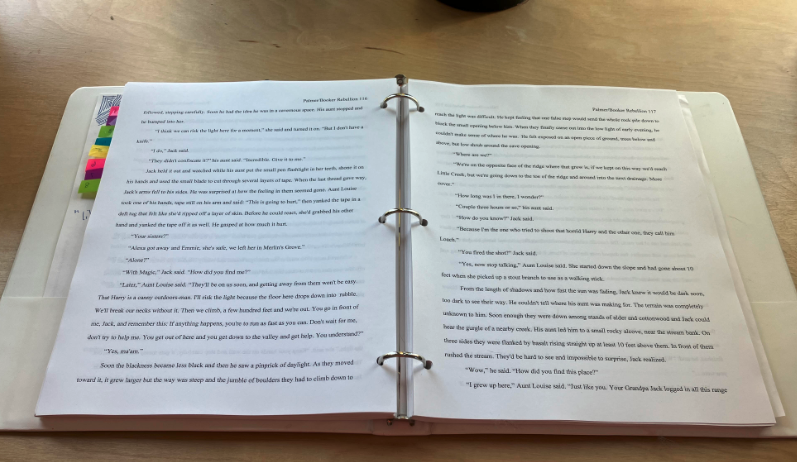
  • I am becalmed. I know this spot from previous long writing projects. Nothing like the exciting beginning when the ideas cascade and occupy most of the mental bandwidth. Nothing like the surprise at the end when you type a sentence and as you look at it, it dawns on you that you have arrived at the denouement.

    No. The mid-latitudes of a book force the writer to deal with the early creative decisions — in character development, plot, setting, voice — that now midway through reveal the many ways in which they constrain the story. It’s like building a box around yourself and hoping you have an exit strategy.

    The horse latitudes describe a grim reality of sailors in the region 30 degrees north and south of the equator where the winds die to nothing and can stay that way for weeks on end. I have always hoped it was apocryphal, the story that New World explorers becalmed in this zone threw their horses overboard to conserve drinking water for the humans. It’s here where some of my best big creative ideas may need to be jettisoned to make the story better.

    Me and my writer friends, we commiserate about this stage. We acknowledge the tedium. We affirm our dream to finish the project. We assign ourselves word counts. We don’t have to like every word. We just have to get the next sentence on the page.

    I am at 33,000 words of a book that may go to 80,000, best guess. At first my excitement buoyed and carried me. Now it’s time to bring some discipline to my game, knowing from previous projects that creative winds will return.

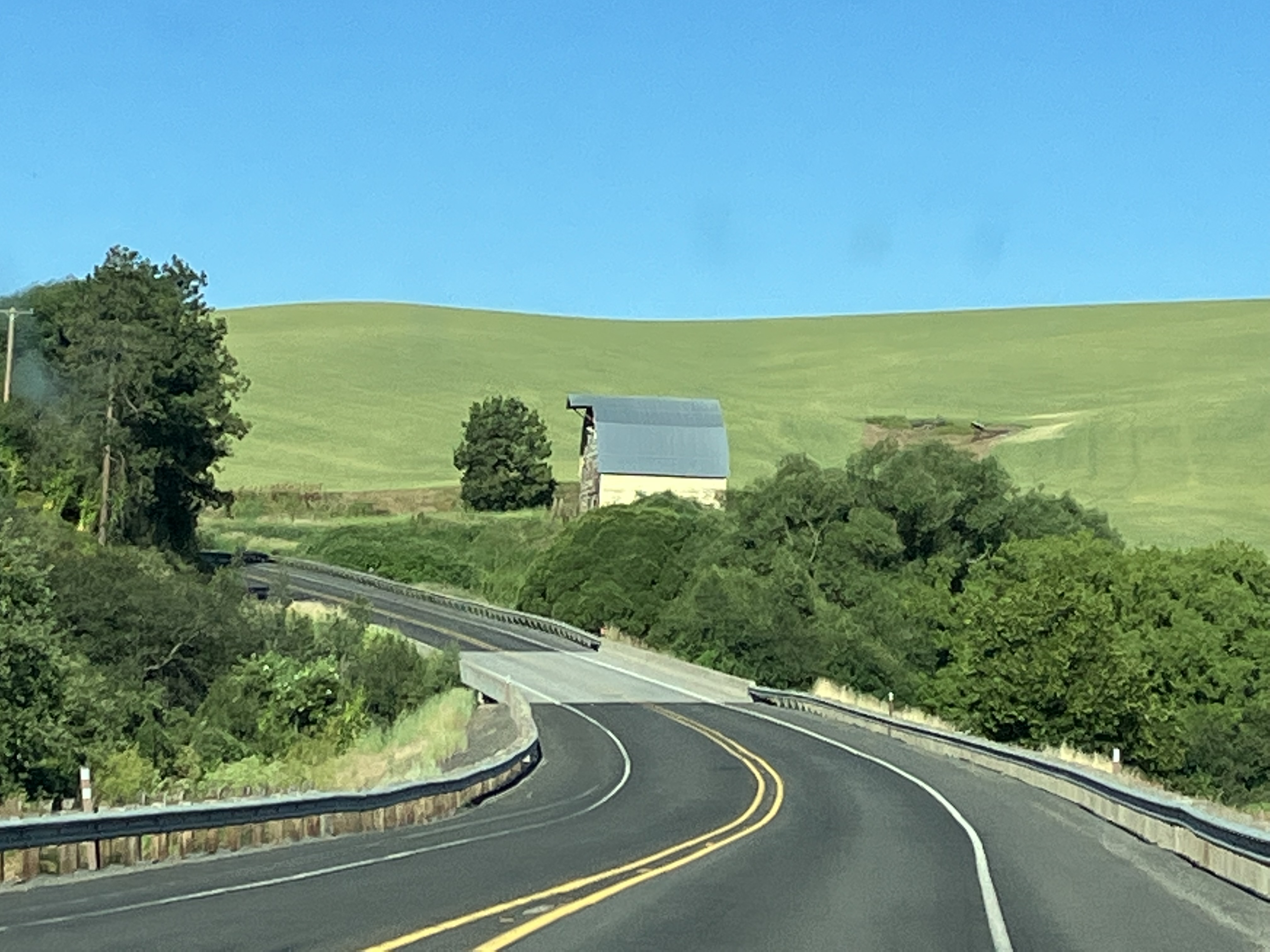
  • If you visit the Wikipedia page describing the Palouse, you get a much better picture of this voluptuous landscape than my little image, snapped from behind a windshield at 60 mph. It’s an experience to visit this area of western Idaho/eastern Washington in spring and I don’t think pictures can do it justice. To see these unique undulating hills, covered with wheat and the bright blooming canola fields had a profoundly gentling impact on my usually busy brain. We traveled through on our way home from southern Alberta, which also features rolling hills and lovely farms. But not like this.

    We normally take a more spectacular route to get home to our little corner of the southern Willamette Valley in Oregon. We cross the jagged Rockies in southern British Columbia then run down through Bonner’s Ferry and Sandpoint Idaho. This time we dropped southeast of the Rockies, skirting Glacier National Park in Montana and then coming down the east side of Flathead Lake (who knew the ameliorating effect of the lake means a huge cherry-growing region in Montana?). We drove down to visit friends in Moscow Idaho, which is not on any of the major east-west or north-south interstate highways. It’s in the heart of the Palouse.

    I have lost count of my road trips to southern Alberta to visit family in Lethbridge and wander the trails in Canada’s best but perhaps least known national park, Waterton Lakes. I’m so glad we detoured off the quickest-there-and-back highways to see more of the region. I’m a western woman. Born in Saskatchewan. Lived 50 years in Utah, Washington, Alaska, Oregon. Not dissing the rest of North America or any of the other glorious continents. But I love this vast region. And I love getting more intimate glimpses of it.

    I’m reminded of William Least Heat Moon’s moving book “Blue Highways”. So amazing to get off the screaming multilane interstates, slow down (though in Montana they don’t shy away from 70 on two lanes). With family ties in Canada and the United States, I’ve found myself thinking of the region not so much as two separate countries but as one salmon nation, a term coined by people who know much more about biodiversity than I ever will.