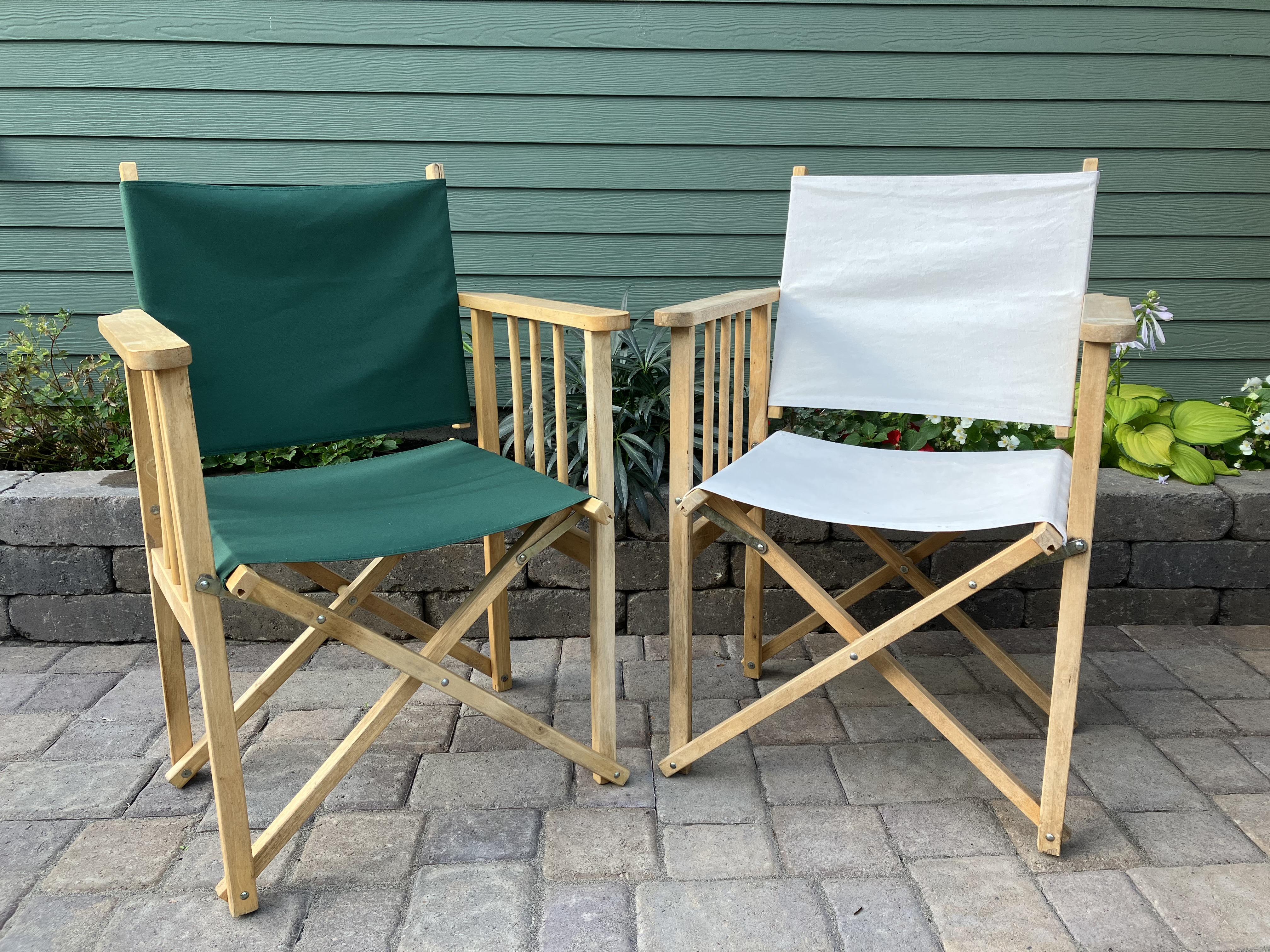
I’ve had these director’s chairs for 32 years and the original white canvas finally failed on one of them. Since I’d taken them apart a few times over the years to clean the canvas, I knew replacing the old canvas wouldn’t be too difficult.
In the realm of projects, this was a short one and satisfying not the least because it’s simple and in the summer these chairs get daily use on the patio. A medium-term effort, bug screens for the van windows, took a few months. My long-term sewing project (a hand-stitched quilt begun in January) is two-thirds complete.
The varying length of these projects matters. Conceiving of, working on and finishing a creative task in a few days while other projects perk along at their own plodding pace, offers the reward inherent in finishing. Things that take longer — these middling length things that spin out of control because they involve unexpected problem-solving — provide the satisfaction of the ah-hah! moment when a solution presents itself and the making can continue.
They are like way-points, reminders that the long-term project, the 70,000 word book, just needs its own daily infusion of effort — solutions to thorny plot problems, taming of characters threatening to kick the book to pieces (a line I borrowed from E.M Forster’s “Aspects of the Novel”), releasing of the shy folk of the story who will unexpectedly step up to fix that plot issue. But it can only happen in the daily tedium of words going down on the page. Thinking of it in smaller chunks — this scene, that chapter, etc. — is useful.
And that is today’s little pre-writing pep rally.

 Susan Palmer's Exquisite Now