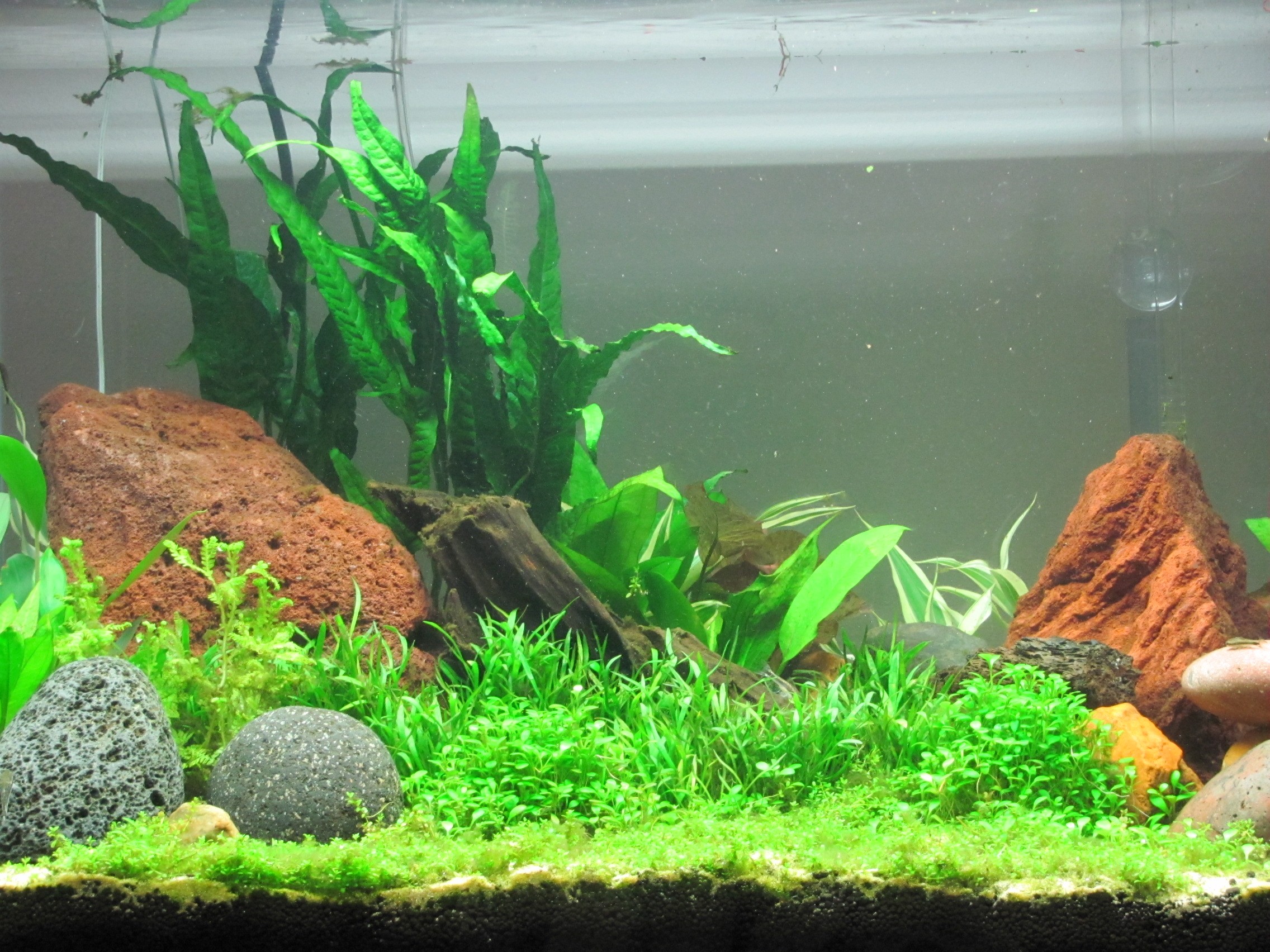
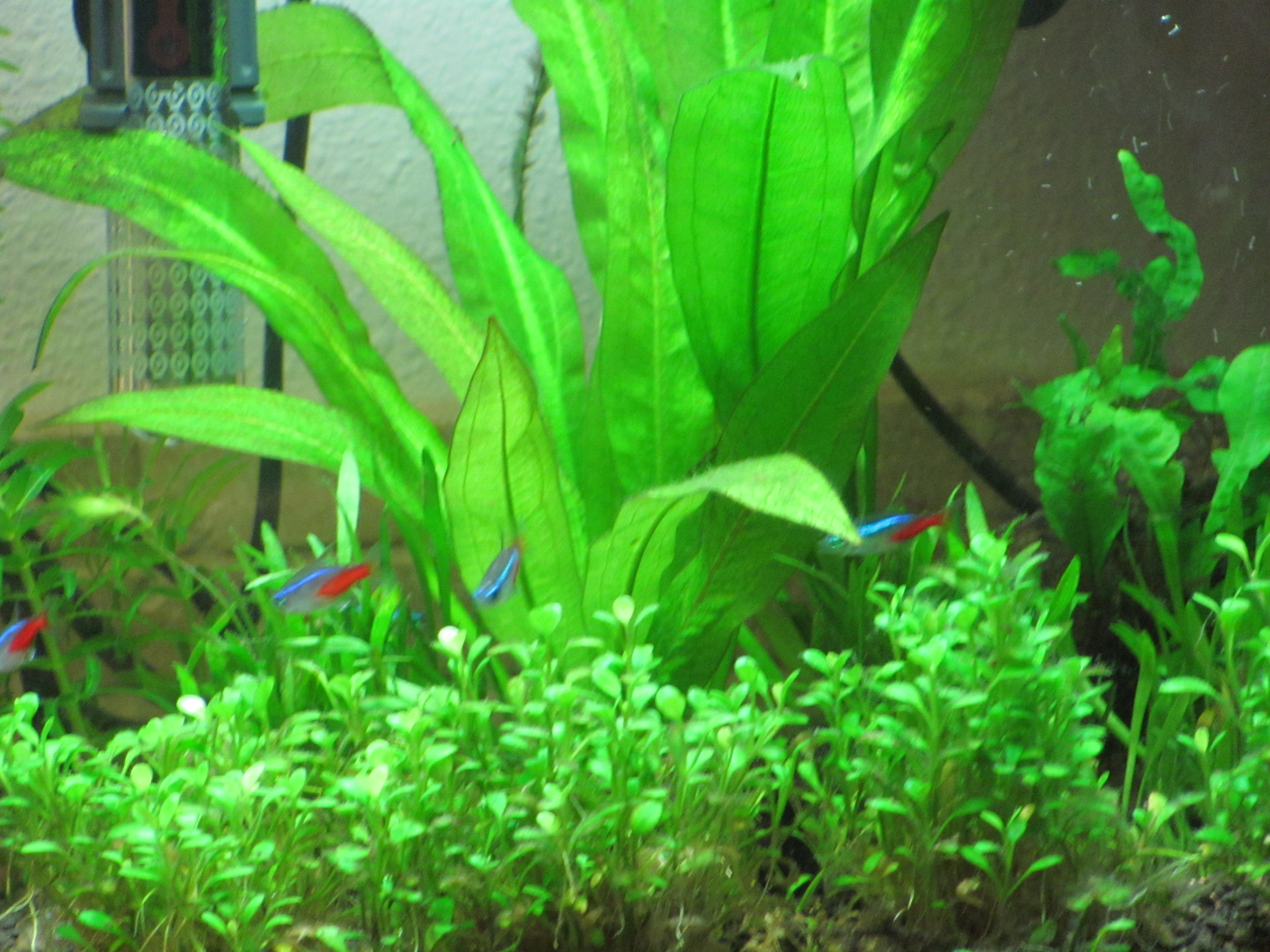
 A month ago, the cube garden was a disaster, overrun with a stubborn algae the otos couldn’t keep up with and rotting fish food because I hadn’t yet figured out how much the neon tetras were eating. Cleaned it out. Cut out the plants that were algae-choked, replanted with micro sword and glossostigma, recharged the DIY CO2 and moved the whole system back into the kitchen where it won’t be neglected. Now it’s positively glowing. Seven gallons of planted tank heaven. I love this little set-up because it’s my first aquarium, purchased almost three years ago. Beautiful, simple (well, complicated but in a good way) and makes me happy.
-
-
 The otocinclus (dwarf suckermouth catfish, nine of them) and the plecostomus (a solitary albino) went into the tank on Saturday. By Monday morning most of the algae had been eaten. Wow, you guys. Nice work.
 -
 When you set up a heavily planted aquarium with everything that life loves — oxygen, carbon dioxide, nutrients, etc. — you should not be surprised that the very first thing that comes to call is algae. Here’s the algae in my new 40-gallon planted tank a mere two weeks after set up. I held off adding fish that would munch the algae because the specialty soil I selected is off-gassing ammonia that will kill fish and my filter system doesn’t yet have the beneficial bacteria established that will break down the ammonia. Patience is a virtue. Technical detail: yes, it is true, that lower PH with temps in the 75-77 degree Farhenheit range render the ammonia mostly harmless, but I don’t have a trustworthy thermometer yet and don’t want to needlessly risk fish.