Last month Craig and I camped and hiked at Humbug Mountain State Park, which, though close to the highway, has a secluded feeling. A fine trail winds through big trees to the top of the mountain and while its elevation gain is 1,700 feet over three miles, the switchbacks make it seem less arduous than I’d expected. We hiked at the right time for flowers: wild iris, rose, rhododendrons, bleeding hearts, and many others I have no names for.
Being in the moment on that hike proved easy. The periodic views of the Pacific Ocean through the fir trees, the spring flowers, the sound of birds. So much visual and audio stimulation to keep the mind in the present.
Day to day, I find myself stuck in thoughts of what has happened and what may be about to happen. I’m not dissing the past and the future, but I have this feeling that savoring now shouldn’t be reserved for special times.
I wonder if my daily activities can include the kind of nowness of the hike. Maybe there’s value to paying attention to the folding of the laundry, the doing of the dishes, the weeding of the garden.
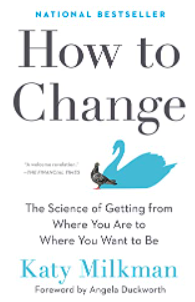
I like the strategies in “How to Change” by Katy Milkman, particularly because the University of Pennsylvania professor shares the research behind them. My previous blog noted one of those strategies, pairing something enjoyable with the less enjoyable habit currently under construction — Milkman calls this “temptation bundling”.
I used other techniques when I set a goal to take a monthlong break from drinking alcohol, like picking a start date connected to the beginning of the week and the beginning of a camping trip. Milkman calls this the “fresh start” effect. I also had a plan for meeting the moment in the day when I typically have a glass of wine in my hand.
But I decided not to use one of the book’s strategies, a punishment for failing to complete a goal. With this strategy people commit to a financial penalty for failing to follow through. I considered, then discarded the idea. I need encouragement, not fear of a negative outcome, to help me with goals.
This book doesn’t sugarcoat the fact that making changes is challenging. In much of the research that psychologists considered successful just 20 or 25 percent of subjects sustained change. That is humbling.
I don’t recall now if Milkman said much about this but for me taking a moment to let myself be gratified by the small steps I’ve taken — written my 1,000-word daily quota, spent my half hour weeding the garden, practiced my guitar, etc. — often fuels me for the next day and the next small steps.
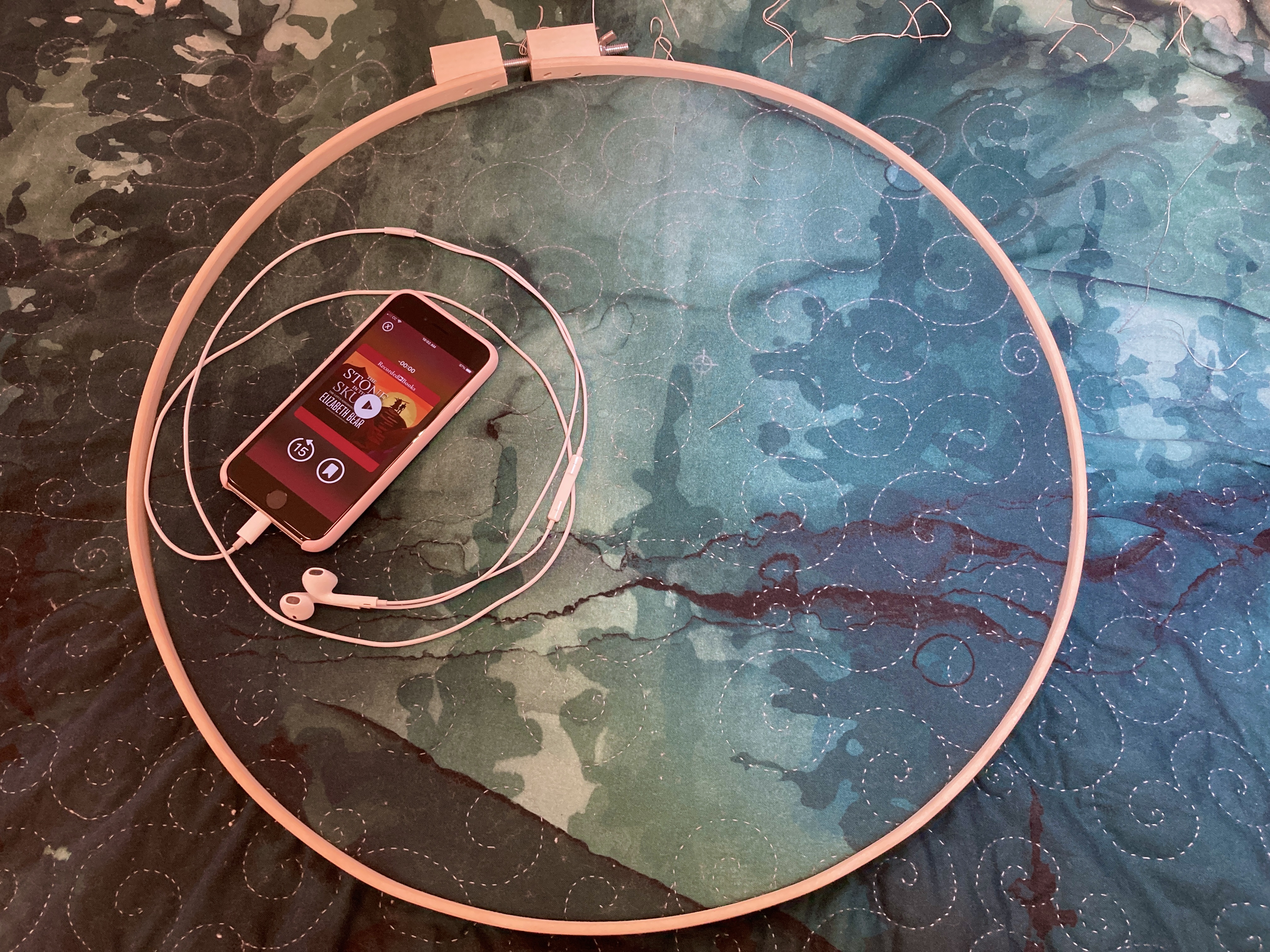
I haven’t been a fan of audio books, but listening to compelling stories reduces the tedious aspects of hand stitching a large quilt. (Yes, endless spirals. What was I thinking?) While half a dozen audio books have helped me make good progress. I’ve been surprised to learn that the voice reading the book has a significant effect on my appreciation of the story.
I don’t care for the person reading Gregg Hurwitz’s “Orphan X” series (a guilty pleasure I confess to). If I hadn’t read the first few books in the series I doubt I could have listened to the entire “Prodigal Son” while quilting. And I recently tried (and failed) to listen to Karen Joy Fowler’s The Jane Austen Book Club. The reader’s voice interfered so much with my ability to connect with the story that I gave it up after the third chapter.
Because Fowler is such a respected author, I began to wonder whether the insertion of someone else’s voice between me and the written page was having an impact on my sense of not just the quality of the narrative but also the nature of the characters.
Casting about for something else to listen to, I stumbled on Elizabeth Bear, thanks to author John Scalzi’s inimitable and wondrous blog Whatever. This time, rather than just jumping into the audio book, I read the first few chapters, using Amazon’s “Look inside” feature. Reassured that I liked the both the writing and the story, I turned to the audio version and found the voices fit the story for me.
I appreciate my local library making audio books available through the Hoopla digital streaming service. I absolutely do buy books, but can’t buy all the books all the time.
I’m listening to Bear’s “The Stone in the Skull” now and suspect that the actual purchasing of Bear books won’t be long in coming.
Listening to books has reinforced for me the notion that reading is an oddly private and intimate act between author and reader, two people who rarely meet, but find themselves drawn together in an inner invisible dance. While audio books draw me back to my otherwise tedious needlework, I prefer no intermediary between me and the page.
May my eyesight last until someone pulls the last book from my cold fingers.