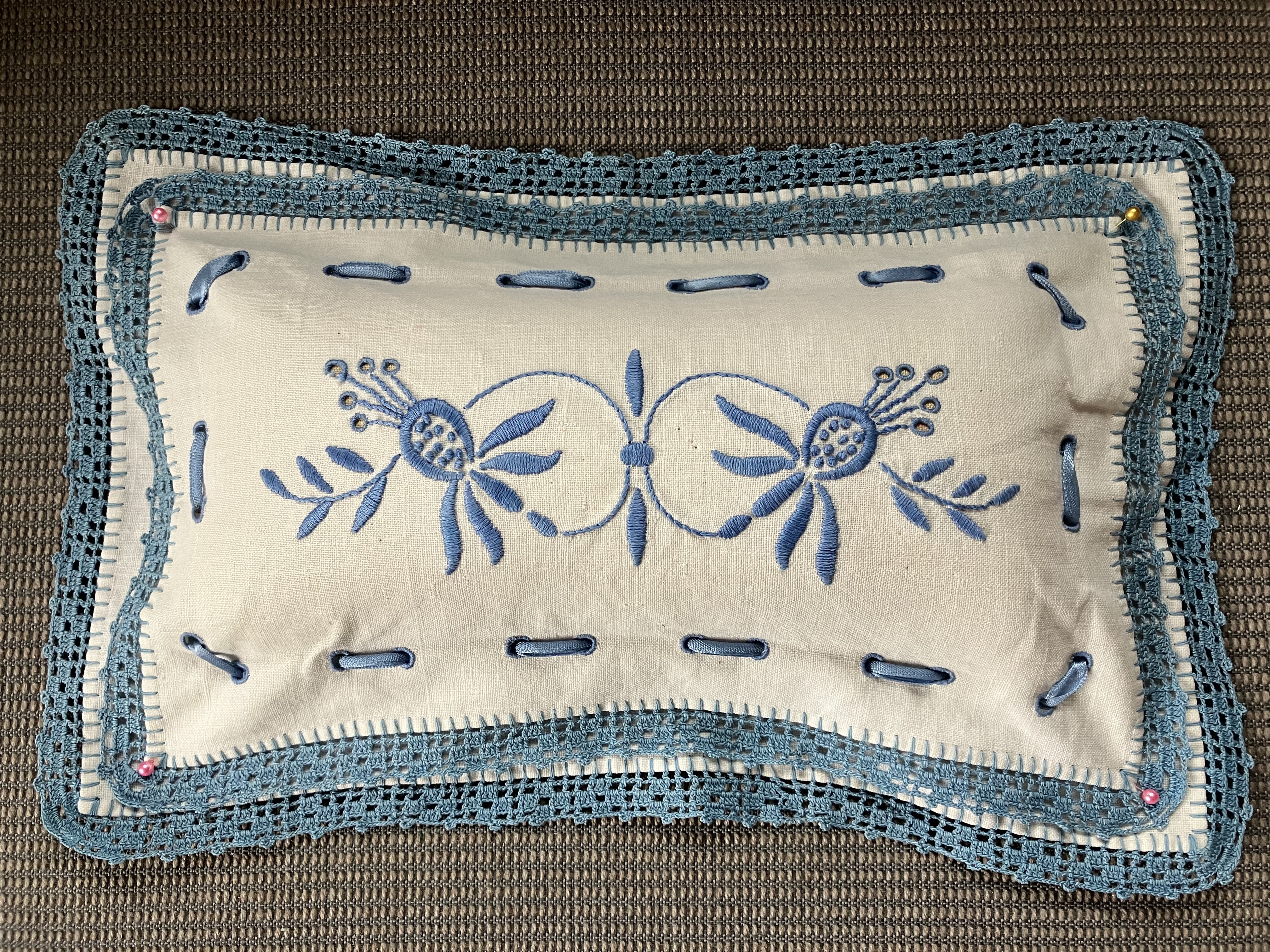
• My grandmother, Maydell Cazier Palmer, had a way with a needle. I was reminded of this on my recent visit with my mother, Irene Palmer, who gave me Maydell’s pincushion, an item I recall from childhood visits to Grandma’s house, but hadn’t seen in decades.

    Maydell’s needlework is inspiring, the tidy satin stitching in the middle, the intricate crocheting on the surround, and the blue ribbon holding it all together.

    My needlework is informed by hers, and I’m also inspired by contemporary artists Mary Corbet and Trish Burr.
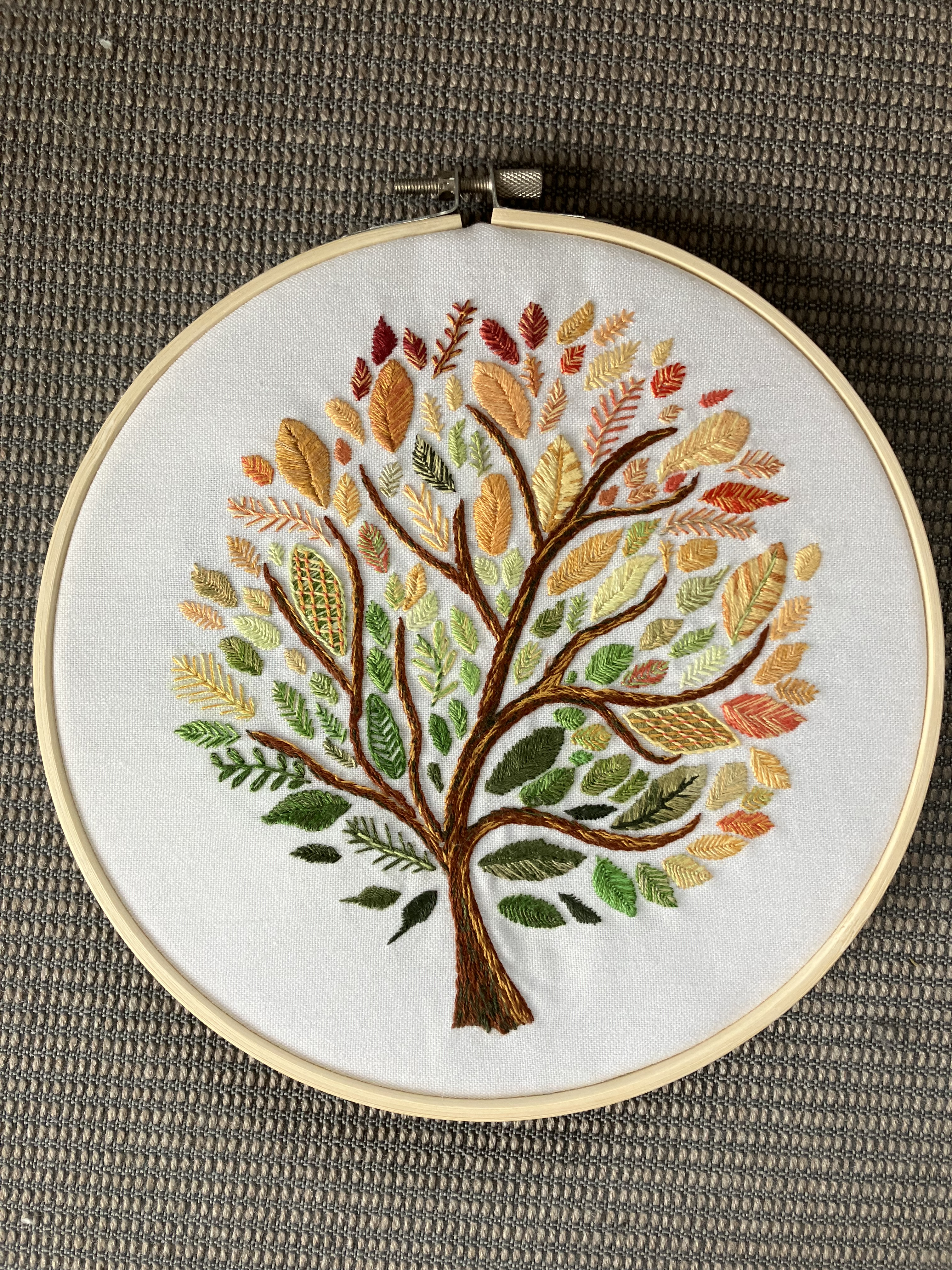
    This is a sampler designed by Corbet that I enjoyed working on. Its graceful form obscures its sampler nature, which is how sewists learn new stitches.

    Our generational connection is a tiny trickle in a flow of history. Textile art is one of humanity’s oldest art forms. I love dabbling in it, knowing how far back it goes.
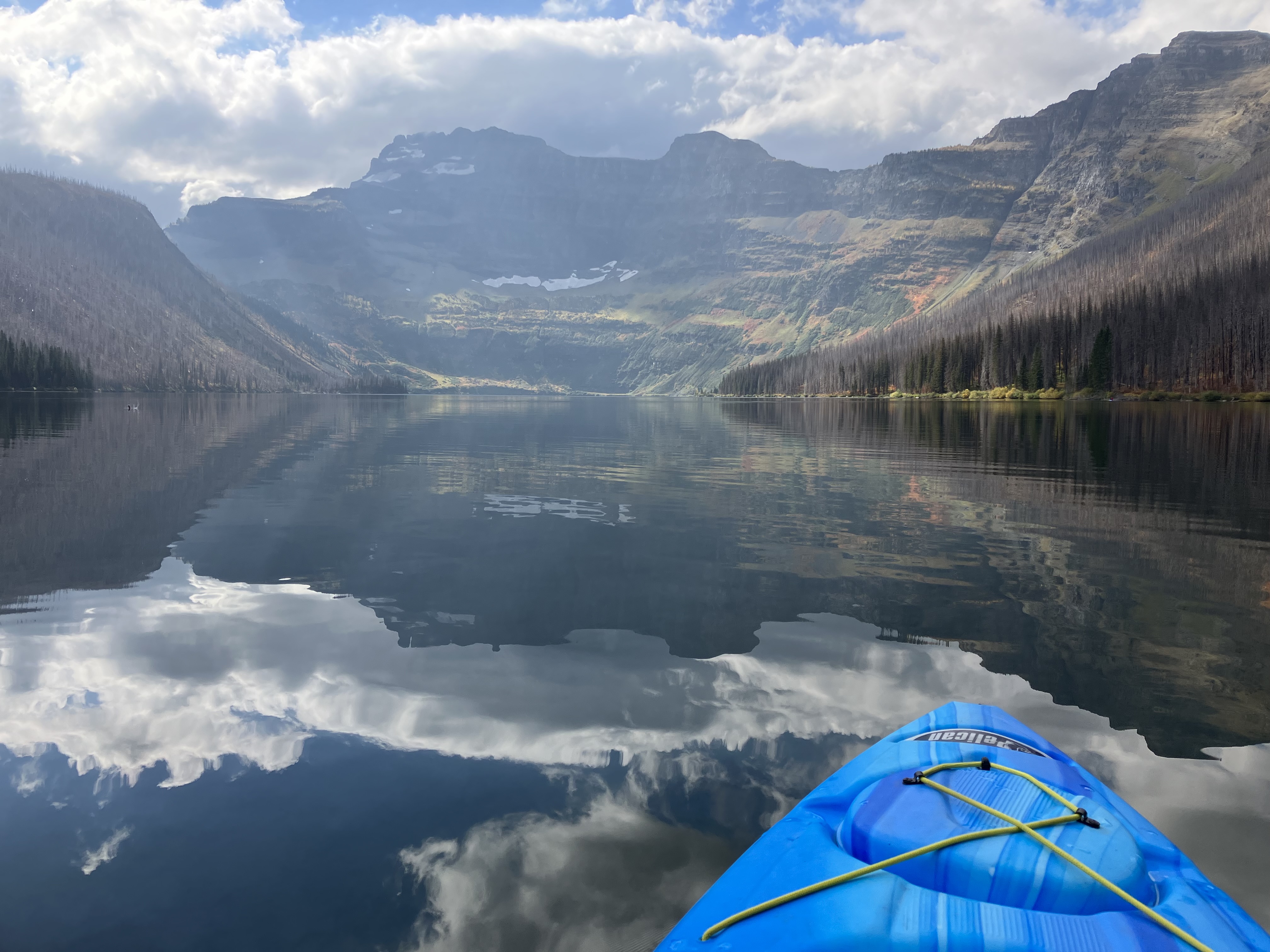

  • Cameron Lake, Waterton Lakes National Park, Canada

    The air is still, so windless that the water itself hardly moves, reflecting sky and Rocky Mountains. Not so many people know about Cameron Lake, one of many tucked among the stunning peaks of Waterton Lakes National Park in western Alberta. The much better known Glacier National Park just south of the Canadian border gets a lot more press. To say nothing of the press of visitors.

    My family visits Waterton often, and my first visit there predates my active memory. But there are pictures of little-kid me alongside Linnet Lake, pre-adolescent me at an uncle’s cabin in the tiny town of Waterton nestled among the lakes and peaks, teenage me on the trail to Bertha Lake. And there are dozens of adult me kayaking on Cameron.

    Cameron Lake is famous for its winds. Smart boaters get an early start because the wind checks in late morning and gets rip roaring by late afternoon. Of course it’s almost always blowing away from the boat dock. And this lake only permits human-powered rigs. Muscle up and paddle hard. A float on Cameron is a workout.

    But not on an early October visit in 2022. This year, the weather gods offered a boon, a perfect sun-drenched autumn morning and no wind. Also. a deep deep quiet. No sighing of the trees, no chatter from other boaters. And, for a short time, no jets overhead. Then a brief chitter of magpies. Then the world in stillness.

    I like to say I know this place well. The lake, this day, said otherwise.

  • British author Edith Pargeter, who also wrote under the psuedonym Ellis Peters, does a masterly bit of work in the second novel of her fine Cadfael Chronicles. That book, One Corpse Too Many, is set in 1138 England and includes a scene pivotal to the plot of the story, but also meaningful for its glimpse into human tragedy. Following the hanging of more than 90 men who were in rebellion against King Stephen, the families of the fallen come to claim their bodies for burial. It’s quiet and sad:

    Some dozen or so had been claimed by parents and wives. Soon there would be piteous little hand-carts pushed up the slope to the gate, and brothers and neighbors lifting limp bodies to carry them away. More of the townspeople were still coming timidly in through the archway, women with shawls drawn close over their heads and faces half-hidden, gaunt old men trudging resignedly to look for their sons.

    Among the men hung by the orders of the king, is one murdered and then thrown in among the other dead and it falls to the series’ hero Brother Cadfael to both discern that one corpse is not like the others and then to discover the killer.

    I found myself moved by the small detail of a horror of war — the trauma of reclaiming the dead — and impressed that this scene was also pivotal to the development of the plot.

    I’ve been enjoying Pargeter’s Cadfael Chronicles, impressed with her diligence in creating a believable historical setting but also with her skill in building a compelling narrative. It’s one thing when a scene evokes deep emotion. It’s a mark of expertise when it serves the plot so well.