I’m starting my mornings with Nia’s 5 Stages. I love how Nia trainer Laurie Bass has described this practice on her web site.
For my non-dancing friends, this isn’t dance. It’s a stretching/moving routine that only takes five minutes. For me this simple morning ritual brings a wonderful body-centered awareness. I have a lovely recording of “Where Giants Walk” that I move to. It’s on the “Feather, Stone & Light” CD, which features Native American flutist, R. Carlos Nakai, guitarist William Eaton and percussionist Will Clipman. It’s just the right length.
Also, since I seem incapable of refraining from Nia evangelism, I can’t overstate how good it feels to dance with Laurie Bass, who has fine online recorded routines through the Nia on Demand website. She also teaches live online classes through her website.
The other cool thing about Bass’s website is its excellent articles about Nia.
I’m appeciating how good feelings that start in the body feed the brain. The 5 Stages help me with that.
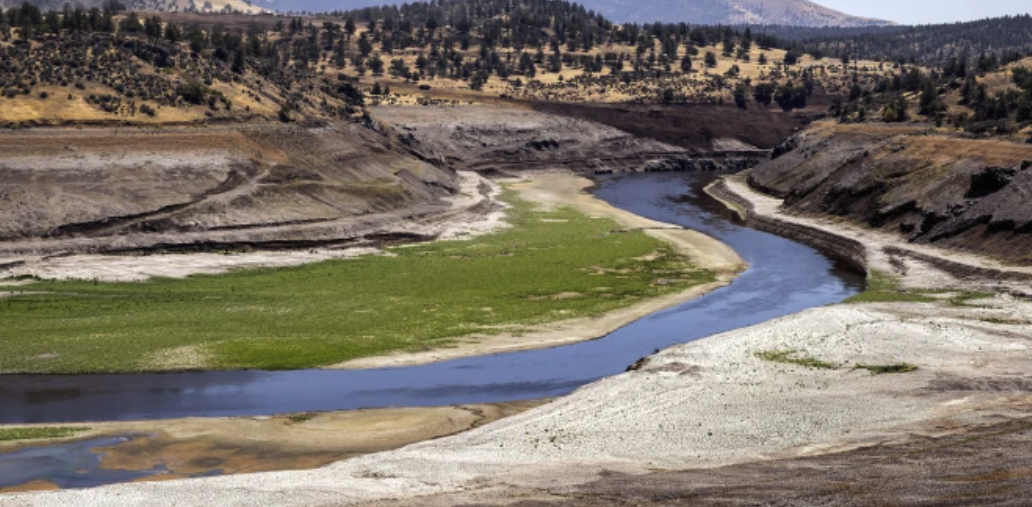
The Klamath River flowing where J.C. Boyle Dam once stood near Keno, OR (Swiftwater Films, via the Associated Press).
A cool thing is happening along the Oregon, California border. Salmon are returning for the first time in decades to the Klamath River. Thank the tribes — Karuk, Yurok, and Klamath — for their perseverance in leading the collaborative effort to free the river from the constraints of four hydroelectric dams that blocked salmon access to the streams where they breed.
Here’s how an Associated Press article described its importance to the fishery: The structures halted the natural flow of the waterway that was once known as the third-largest salmon-producing river on the West Coast. They disrupted the lifecycle of the region’s salmon, which spend most of their life in the Pacific Ocean but return to the chilly mountain streams to lay eggs.
The first salmon coming up the Klamath past the J.C. Boyle dam in more than a century were spotted this year on Oct. 16. Read more about this in an Oregon Public Broadcasting story here:
I’m focusing on tribal topics because November has been designated Native American Heritage Month, a recognition to honor the ancestry and traditions of Native Americans. But it’s also worth noting the key contemporary role the tribes play, and not just in the realm of environmental issues, but in many community aspects important to everyone.
Where I live in the southern Willamette Valley, the Confederated Tribes of the Coos, Lower Umpqua and Siuslaw Indians have taken their casino earnings and created a foundation that funds many Oregon nonprofits in Coos, Curry, Douglas, Lane, Lincoln, Harney, and Multnomah counties. They fund food banks, school programs, and a range of nonprofits supporting families. Last May, they announced $720,000 in grants.
Honoring ancestry and tradition is always a good thing. I’m also excited to think about the ways they are working right now for present and future generations.

 Susan Palmer's Exquisite Now