• yard sign in Eugene’s Friendly neighborhood

    The United Sates is a mythic place. It’s never quite existed as billed. It elevates freedom, yet its earliest economy was based on slave labor. It fought against genocide in Europe, yet tried mightily to destroy the continent’s first peoples.

    It welcomed immigrants, yet across many decades and for different reasons persecuted the Chinese and the Japanese who came here.

    Still, the best thinkers had these ideals of government chosen by the people and restrained by the rule of law. They envisioned a country where people of differing beliefs and backgrounds could exist side by side with respect.

    When France gave the United States the Statue of Liberty, a poet wrote a fine sonnet extolling the virtue of a welcoming place. Titled The New Colossus, it’s something to consider as current government leaders exercise power rather than restraint.

    No country lives up to its highest ideals. None of us as individuals do. But we have ideals that we publicly honor as a way of agreeing that we want to be our best selves. It’s tragic to watch those ideals being so undermined.

    Here’s the text of The New Colossus, written by poet Emma Lazarus, 143 years ago. Apparently we no longer aspire to be Mother of Exiles. Seems we’re reverting to the old Colossus, aspiring to domination rather than peaceful co-existence.. I wonder if the people will exercise their control of government in the coming year and in 2028, and whether this government, so bent on power, will actually allow it. And whether the generals, at the end of the day, will go along.

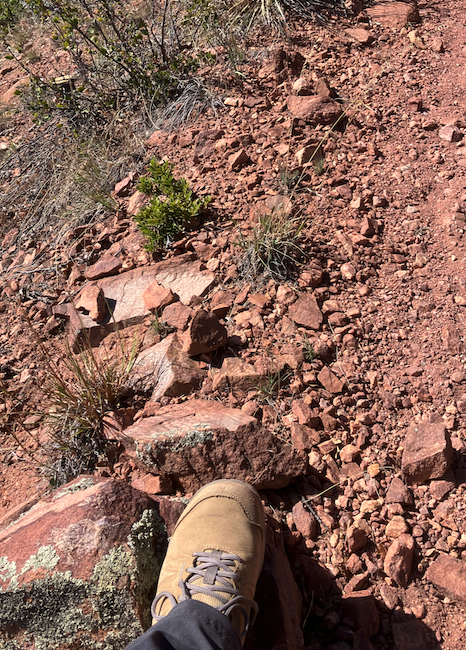
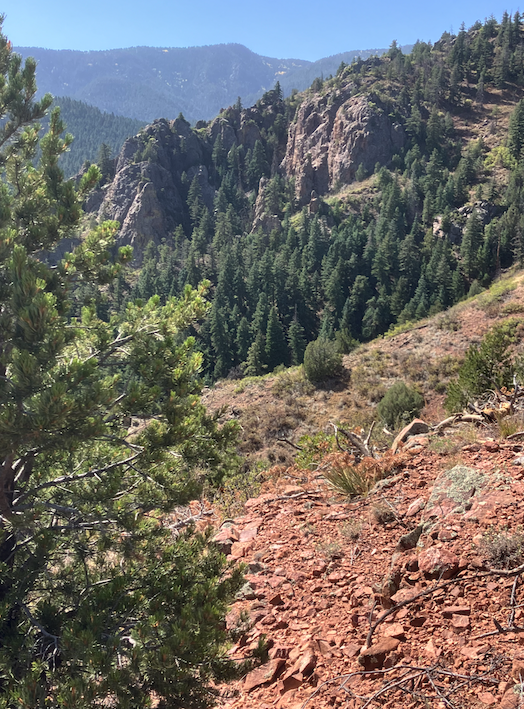
  • Hiking Colorado’s Wet Mountains

    I always underestimate the time it takes to edit. It’s like hiking in the mountains. You’re walking along, focused on what’s in front of you. You estimate the time it will take to get through 80,000 or so words of a novel. Then you come around a bend in the story and you just stop. You read the section over. You read it again. The plot is broken here. It’s not just a tidying up job anymore. It’s like you just discovered the ridge you thought you’d be clearing in another 10 minutes, is a couple hours away.

    Susan Palmer 09/2024

    Or a whole day away. Or a week away. Damn.

    Here’s another metaphor. You are operating on a patient. You think they just need some stitches, but then you look closer and discover they’re about to lose a limb. Sigh. This is where I try to remind myself of writer Anne Lamott’s great advice about writing. You do it word by word or in her particular metaphor “bird by bird.”

    Being here now is challenging when I really want to be 150 pages forward, past this tangle. The only way out is through. I’m glad my previous project has found a publisher. This project is far from ready.

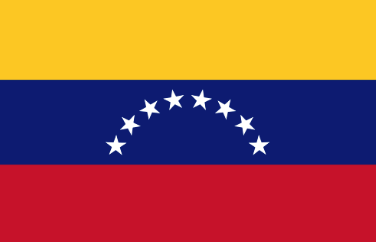
  • I lived in Venezuela for two years as a teenager. My dad was part of an international team offering training across South America on sustainable land and water resource development with a focus on agriculture. This program was created by the Organization of American States. Maybe you don’t know that organization, but it is among the oldest regional multi-national organizations in the world, first conceived of 1889 at an international conference in Washington DC. It still exists today with 35 members across North, Central and South America. OAS members include the United States, Canada, Mexico, and Venezuela. Its purpose:  to achieve “an order of peace and justice, to promote their solidarity, to strengthen their collaboration, and to defend their sovereignty, their territorial integrity, and their independence.”

    Its headquarters is in Washington D.C.

    I had many firsts in Merida, Venezuela, a university town high in the Andes mountains where we lived. A boy first kissed me. I heard The Doors music for the first time. I heard and learned to dance to the fabulous rhythms of cumbia music. I learned Spanish. I fell in love with a musical ballad “Caminando Por Caracas” (“Walking in Caracas”) performed by an Argentian singer, Piero. I remember feeling like he did walking down that city’s wonderful Sabana Grande: “Ya lo siento mio.” (I already feel it’s mine.) I had that record and I played that song over and over and over again. I cried when we left Venezuela. It will always have a piece of my heart.

    When I lived there in the late ’60s, Venezuela was a democracy, had recently experienced its first change of government through peaceful means and was thriving. A middle class was developing. The people were generous and friendly. All the deepest feelings of newly minted teenagers infused me there. I can’t separate the way I feel about Venezuela with the way I learned to inhabit my changing body and psyche.

    The degradation of that breath-takingly beautiful country, the fleeing of millions of people who simply wanted a decent life, has been heartbreaking for many years. I want a better future for this country that helped make me who I am.

    I am shocked by the US intervention and abduction of Venezuela’s leader. This isn’t an endorsement of Maduro at all. But if national boundaries can be breached at any time by strongmen with willing generals, I feel we are on the edge of an abyss. Will the U.S., Russia and China now simply carve up the rest of the world with an eye on resource value and extraction?

    Regardless of how anyone might feel about the current American president, what does it tell the other countries who are part of the Organization of American States? What does it tell the world? Does the U.S. not respect its commitments to recognize territorial boundaries? Who are we if we break our word?

    I don’t see these as political questions. I see them as moral ones.