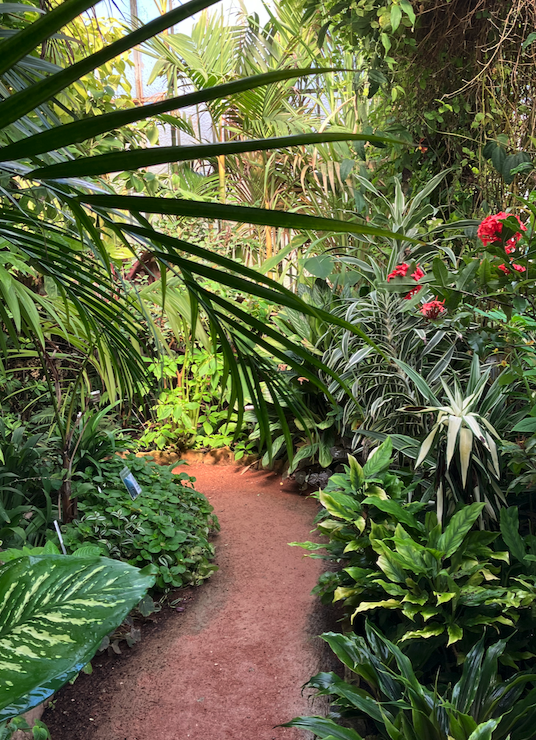
• A three-week trip to Europe last year taught me to plan for travel fatigue
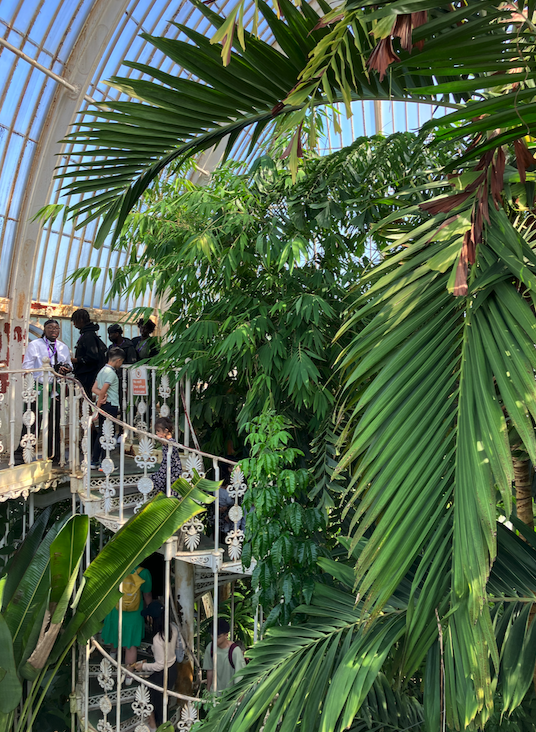
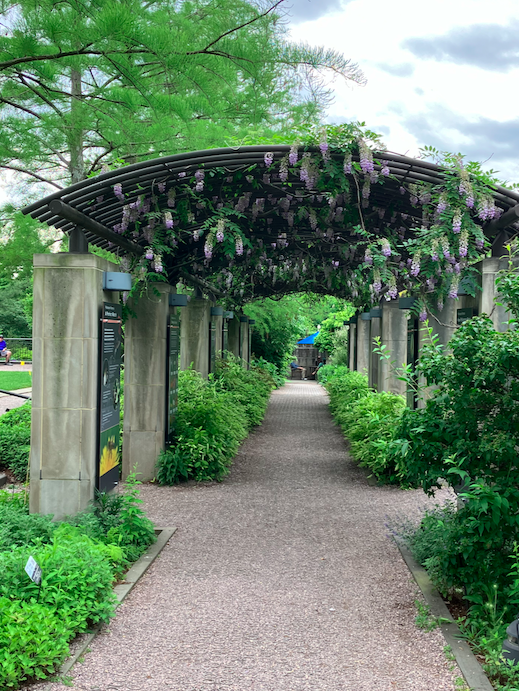
    It was pretty simple, really. Stepping out into lush park or garden surroundings works at home to both sooth and energize. And it turned out to be a good antidote for the exhaustion that goes hand in hand with managing an itinerary and figuring out how to get where we’re going in a new environment.

    During our five days in London, we slipped off to the Royal Botanical Gardens, also known as the Kew Gardens (because they’re located in the village of Kew) when we needed down time. Of course at 330 acres and many specialized exhibits, Kew could exhaust a person who wanted to see it all. We chose to devote most of our time to the stunning Palm House and the treetop walkway.

    And in Geneva, Switzerland, the last stop on that Europe trip, we found the city’s Conservatory and Botanic Garden calming yet also exciting. Like Kew, it was home to plants we’d never seen before.

    During a later trip to Washington DC we found our way, after a day of admiring the capital’s many memorials and musems, to United States Botanic Garden, and it became a quiet oasis after a busy day.

    Having just returned from a fine but tiring trip to Canada (in January, it’s all gray tones), I found myself browsing snapshots of these gardens from past travels, drinking in the visual richness and remembering how magical those gardens were.

    I imagine there are many ways to ease travel burnout: down time in a coffee shop, or a library, or by a pool. The key is remembering that travel will be exhausting and being prepared for it.

    Those lush conservatories with their rainforest plants, even just in photos and memories are doing it for me today.
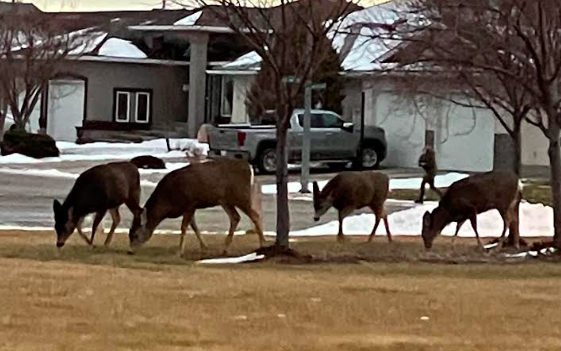
  • Leaving the Lethbridge, Alberta nursing home after another intriguing day with my 99-year-old mother, I did a thing I try never to do: walk while staring at my phone. When I see others do this, I tsk-tsk to myself. Dangerous at worst –people crash into things this way or are crashed into by hurtling machines, perhaps being driven by people also checking messages. Distracting at best — missing out on the here and now for the there and then.

    Fortunately another woman in the parking lot who wasn’t gawking at a tiny screen called out to me. “Deer!” she said. At first I thought she was hailing me in an overly familiar manner. But when I looked up she was pointing. And there they were. About eight or ten of them, grazing along and ignoring us.

    It’s not that I’m unfamiliar with the species. I’ve lived in neighborhoods where they decimated gardens — my gardens! — and it’s not a big surprise to see them at this location. We’re right near the edge of town, where houses give way to the wide sweep of Alberta prairie.

    Still. What a pleasure to watch them lazily feeding as the light fades on a mild winter day. What a gift the other woman gave me, reminding me to be here. She also reminded me how much humans like to share our delight with each other, as though sharing increases our delight.

    Tiny humans on this tiny blue-green ball tucked into this whirling spiral arm galaxy in a universe so immense I can’t begin to comprehend it. “Look,” we like to say to each other. “Look at that. Isn’t it amazing?”

    Maybe that’s what we’re here for.

  • My mother Irene would be the first to blame good genes for her longevity. After all, her mother, Yvonne, lived to 105, and Yvonne traveled independently until she was about 102, visiting kids, grandkids and greatgrandkids all over Canada and the United States.

    I think Irene’s love of life and curiosity about the world may have played some part in helping her reach 99. And those aspects have surely enriched her days.

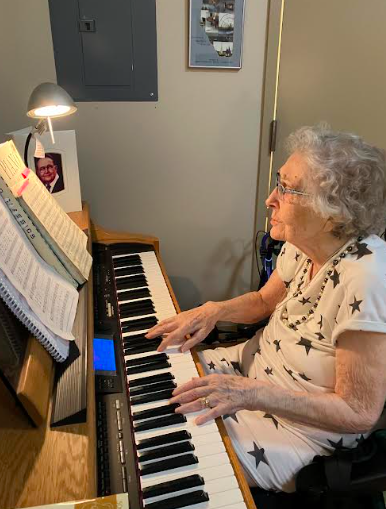
    Here’s a thing she did yesterday: played the piano and sang a lovely lullaby that she often sang to her children.

    The song, “Sweet and Low,” began life as an Alfred Lord Tennyson poem later set to music.

    Also, she complained to me that her one-pound weights (she’s strength training, you see) are insufficiently challenging. I have been instructed to acquire two-pound weights.