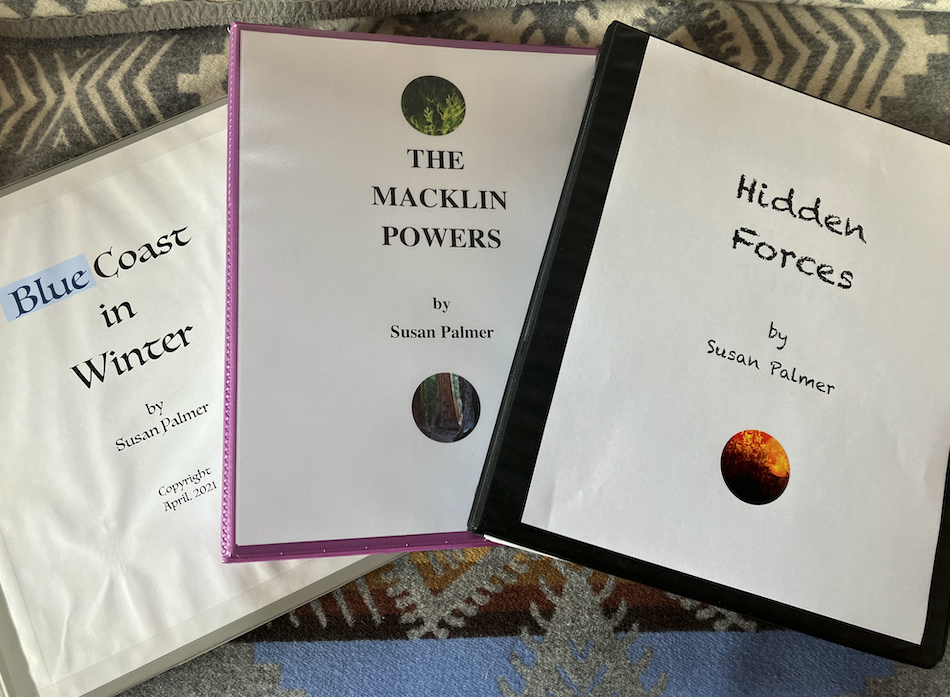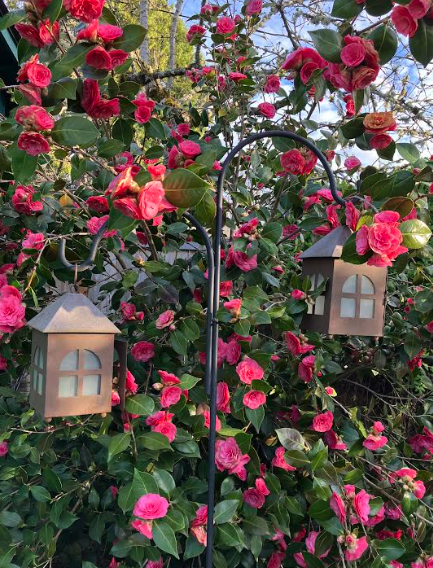
• tall pink blossomed camellia with cute lights in front.

    This camellia began to set buds sometime in October, about six months ago. Three weeks ago, the flowers began to open.

    For the record, I didn’t go outside in November and stare at the buds, hoping they’d open right then. I didn’t do it in December or January or February, either.

    But in early March, when the daffodils began showing off, I did go out and look at the camellia and saw that the first bits of color had begun to reveal the coming blossoms.

    I love how it’s at the height of its gorgeousness right now.

    So that’s my metaphor with the writing process, something to help me maintain perspective. A book is written and edited. The supporting materials about it have been written and mailed to potential agents.

    How long it takes for the subsequent unfolding is in the hands of forces I don’t control.

    One more metaphor: This is kind of like being midway up a mountain. From the bottom the mountain looked very scalable, but half way up, the full height and steepness has become much more apparent. Having invested the time and energy to get this far, it would be counterproductive to turn around and go down.

    Or, as my mother used to say: Patience, little one.
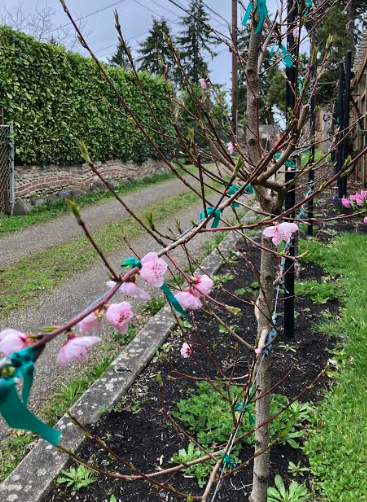
  • A little over two years ago, Craig Cherry planted three fruit trees on the west side of our house and has been patiently training the emerging branches onto espalier wires so they’ll grow in the narrow space. We were excited to see the peach tree this week with the first blossoms since it was planted.

    On either side of the peach tree are two plum trees, not blooming yet, but it’s barely spring…

    Training trees to grow in this espalier manner is a good strategy for small spaces, but does involve thoughtful pruning. The Oregon State University Extension Service has a great explainer: https://extension.oregonstate.edu/news/training-fruit-tree-espalier-takes-good-dash-dedication

  • binders with novel manuscripts in various stages of completion

    Here’s a waypoint on three writing projects, with some to-do notes. Sharing these interim steps keeps me from falling into negative thinking about what I’m getting done in any given week. I’m juggling three novels in various stages of completion. My work week will involve all three.

    The Macklin Powers: completed, copy editing done, query letter and synopsis written, comparable novels identified, agents to submit to identified, first three submissions sent. Remaining tasks: Elevator pitch written for in-person meetings at an upcoming conference, eighteen additional queries mailed out by mid-April.

    Blue Coast in Winter: Second draft two thirds completed. Remaining tasks: Finish second draft, write final draft, query letter, and synopsis; identify comps, have book copy edited.

    Hidden Forces: First third of book written. Remaining tasks: finish first draft, revise in 2nd and 3rd drafts, etc. etc. etc.

    Here’s what I learned after going through all the steps with The Macklin Powers:

    I need to:

    Start looking for books my novel can be compared to right after the first draft is written. Finding comparable novels requires actually reading them, and that can take time. I saved it for last and it was excruciating to be slowed down in submitting because I hadn’t been keeping up with the genre.

    Write the synopsis after the first draft as writing it helps identify weak points in the manuscript. Damn but I wish I’d known that instead of just dreading writing a synopsis. It turned out to be a hugely useful tool for me in the revision process.

    I like having projects in various stages of completion. Sometimes I don’t have the creative spark, but I do have the editing spark or the research spark, so something is always moving forward.

    Wrapping with this fine quote from novelist and great humanist Kurt Vonnegut: “Somebody gets into trouble, then gets out of it again. People love that story. They never get tired of it.”