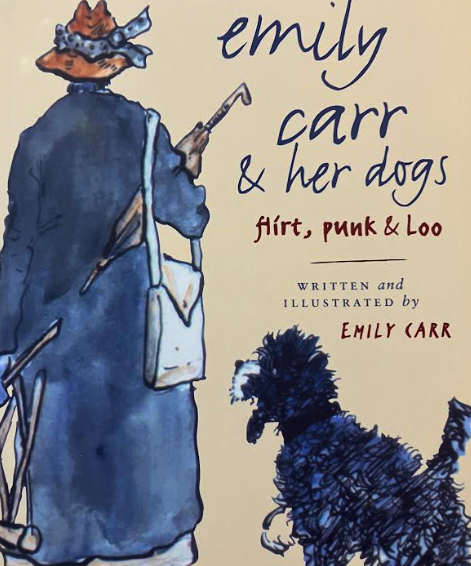
Canadian artist Emily Carr, with whom I’m recently smitten, wasn’t necessarily appreciated in her home town, Victoria British Columbia. She was part of a Canadian artistic vanguard in the early 20th century, embracing modernism and moving away from strictly representational art. They loved her work in Toronto. Her neighbors often scratched their heads. She expressed her frustration over this in a journal entry, part of a collection from her journals published under the title “Hundred and Thousands,” which I am really enjoying.
Here’s what she wrote after acquaintances stopped by her studio in 1934.
They all stood at the end of the room like a lot of cornered rats, pop-eyed and shocked at the sketches. Nobody knew what to say so there was that awful silence in which one tosses sketch after sketch on the easel hooks with nervous haste and wants to sink through the floor. Then someone breaks the silence with a horrid “What’s that supposed to be?” and somebody else says, “Do explain them to us,” and someone else gasps, “Just where is that?” and you want to slap all their faces, burn up all your stuff and then dig a deep hole, tumble into it and claw the earth over yourself.
I wish I could go back in time and reassure her that people would come to gasp at the immense beauty of her vision, that the Art Canada Institute would describe her as one of the first artists of national significance to emerge from the West Coast, that she was a leading figure in Canadian modern art. But those moments of uncertainty, did not appear to redirect her. She kept working on the vision she held.
Also worth noting from that journal entry is the paragraph that followed the above, concerning the swirling global uncertainties of the time:
Horrid things are in the paper today. Austria up to ructions. Somebody assassinated. Europe trembling and everyone saying, “What’s coming?” God alone knows. Gee whiz, I’m tired, mentally and physically.
 Susan Palmer's Exquisite Now