I started the morning thinking about beginner’s mind, what it means, how to achieve it. I wondered if there were research about the efficacy of this practice and typed into the Google search engine “beginner’s mind,” limiting my search to sites with a .gov address. Surprisingly, the first thing listed was not research but an essay by a physician about the value of bringing “beginner’s mind” to patient encounters. I had been thinking about it from a different perspective, being a learner of something new, not an expert using the practice of beginner’s mind to inform my work. But I like this redirect.
I’ll use it today, a writing day for me.
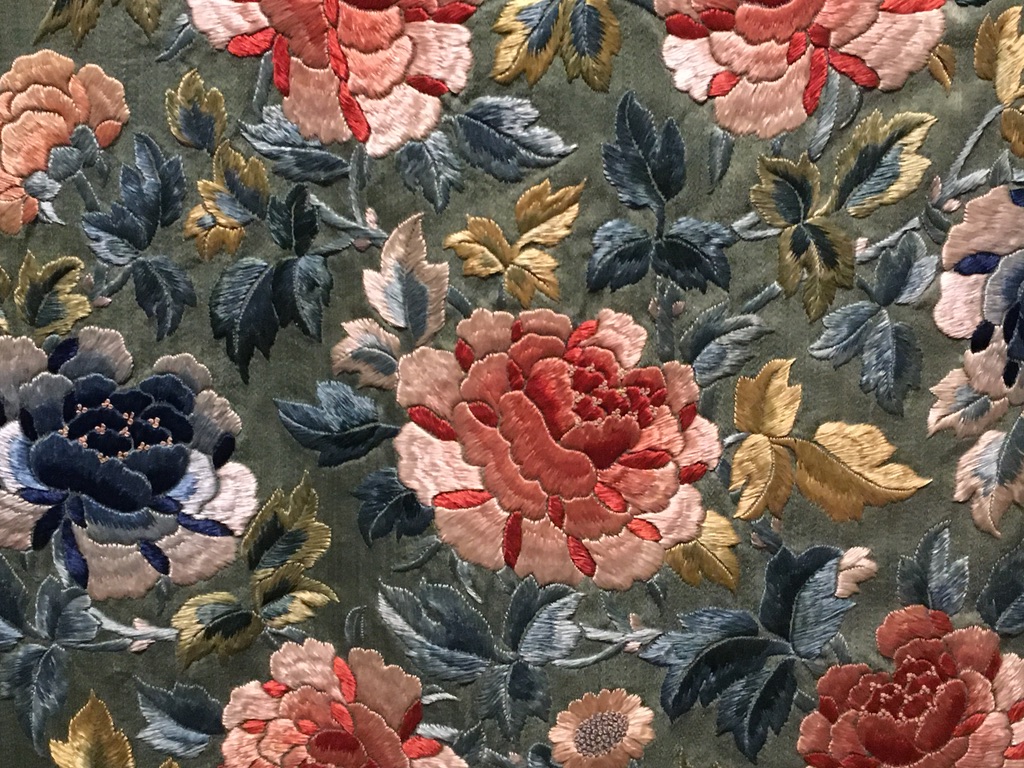
The image above is an example of stunning embroidery practiced by Chinese textile artists. Despite its age, about 170 years, it’s vibrant, intricate, alive. Part of the Jordan Schnitzer’s Museum of Art collection, I can’t help but think the artist brought beginner’s mind to what is a deeply technical challenge. I know a little, a very little, about this kind of embroidery, because I’ve been practicing it for a couple of years. I’m part way through a Trish Burr design, and this practice, currently known as thread painting, uses single strands of thread (the Chinese used silk, but today, cotton is also commonly used), to create these lush images. The stitches, essentially straight lines of less than 1/8 inch to 1/2 inch long, result in the most opulent look.
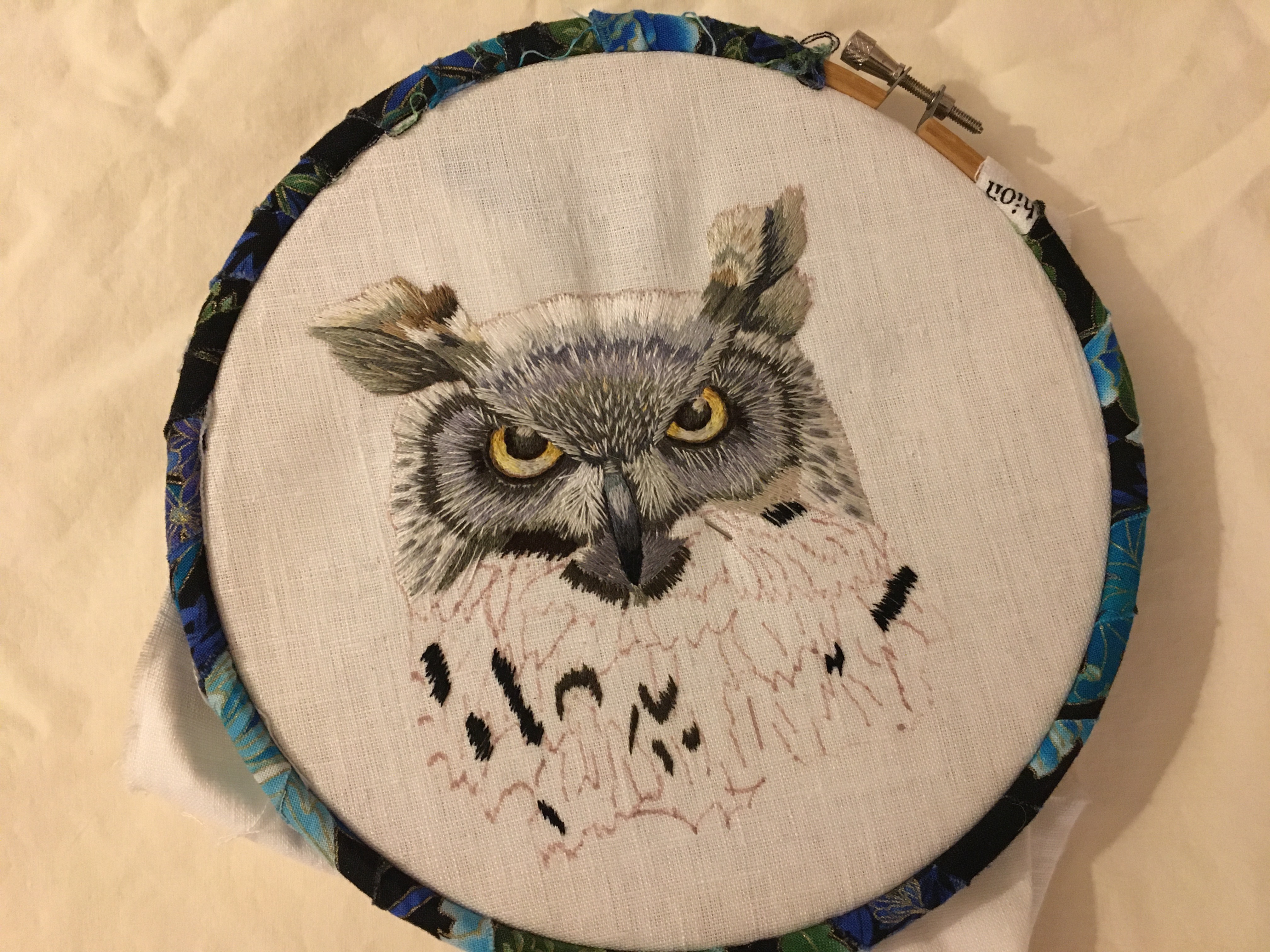
My little owl is a work in progress, and I would say that rather than being in beginner’s mind, I’m more in learner’s mind. I wonder if it’s possible to hold a mutual awareness.
 Susan Palmer's Exquisite Now
2 responses to “Beginner’s mind, learner’s mind, expert’s mind”
[…] sometimes it’s good to go back to beginner’s mind. Two things that stood out: I’d forgotten how important it is when throwing cross-body […]
[…] hawk or an osprey?) benefits writers. Verisimilitude often lives in the small details. My hand-embroidery practice also enhances observation skills. Replicating the colors of nature with thread requires me to spend […]